Principle 4 of 6
Systems should organize complexity and act as scaffolds for humanity and adaptation.
Why it matters
This piece is less about analyzing a pattern in design and more a personal reflection on the role of adaptivity in systems thinking and how, when applied appropriately, it can be a strength.
Systems are powerful tools for making sense of complexity. They can bring order to the overwhelming, helping teams and societies achieve coherence at scale. But they can also become tools of oppression. History is full of systems that achieved control at the cost of humanity. From a distance, the deeper issue often lies in how the system was designed.
Looking back on systems I’ve worked on, I notice that the values I carried into those efforts went beyond traditional engineering priorities, seeking opportunities to embed humanist values as well. To me, the standard for great systems is not only whether they organize complexity, but whether they also act as scaffolds for humanity and adaptation.
What do I mean by “system”? Donella Meadows, a pioneer in the field, defines a system as “an interconnected set of elements that is coherently organized in a way that achieves something.” I like to think of it even more simply: a set of interrelated consequences.
Since one of my original entry points into design was a curiosity in architecture, Christopher Alexander’s A Pattern Language gave me an early glimpse of how the strategy of systems worked in building design. Later, as a digital product designer, I saw how design systems served a similar role: organizing building blocks so development could move with coherence and scale. And when shaping complex user experiences across different surfaces and infrastructures, systems thinking became the lens that ties everything together, helping me diagnose, reason, and improve them.
That metaphor of building blocks has been useful throughout my practice, but I’ve also found it essential to focus on the humanity in addition to the bricks. This is where systems move beyond technical coherence and overlap with lived experience. What I’ve observed is that human-centered systems can raise the floor of experience. James Clear puts it succinctly: “You don’t rise to the level of your goals; you fall to the level of your systems.” The challenge is to design systems not as constraints, but as enablers—scaffolds for growth.
This is just one perspective, and not the only one. There are contexts where strict systems serve us; for example, aviation, medicine, and financial regulation all rely on constraint for safety and trust. My concern is less with rigidity itself, and more with whether a given system calls for strictness or for adaptivity.
Over time, these questions have become second nature for me:
•
Is this a system?
•
What are the leverage points?
•
How might I intervene?
•
Can the updated structure help free people instead of constrain them?
This habitual lens has shaped how I approach design. I tend to look first at what structures are driving the dynamics at play, then design interventions that change the system itself. Done well, those interventions go beyond taming complexity to spark more creativity, trust, and advancement than would have been possible without them.
In my work
Across different contexts, I’ve tried to design systems that don’t just organize complexity, but help people adapt within it. Here are just a few:
GNARBOX retrospective design
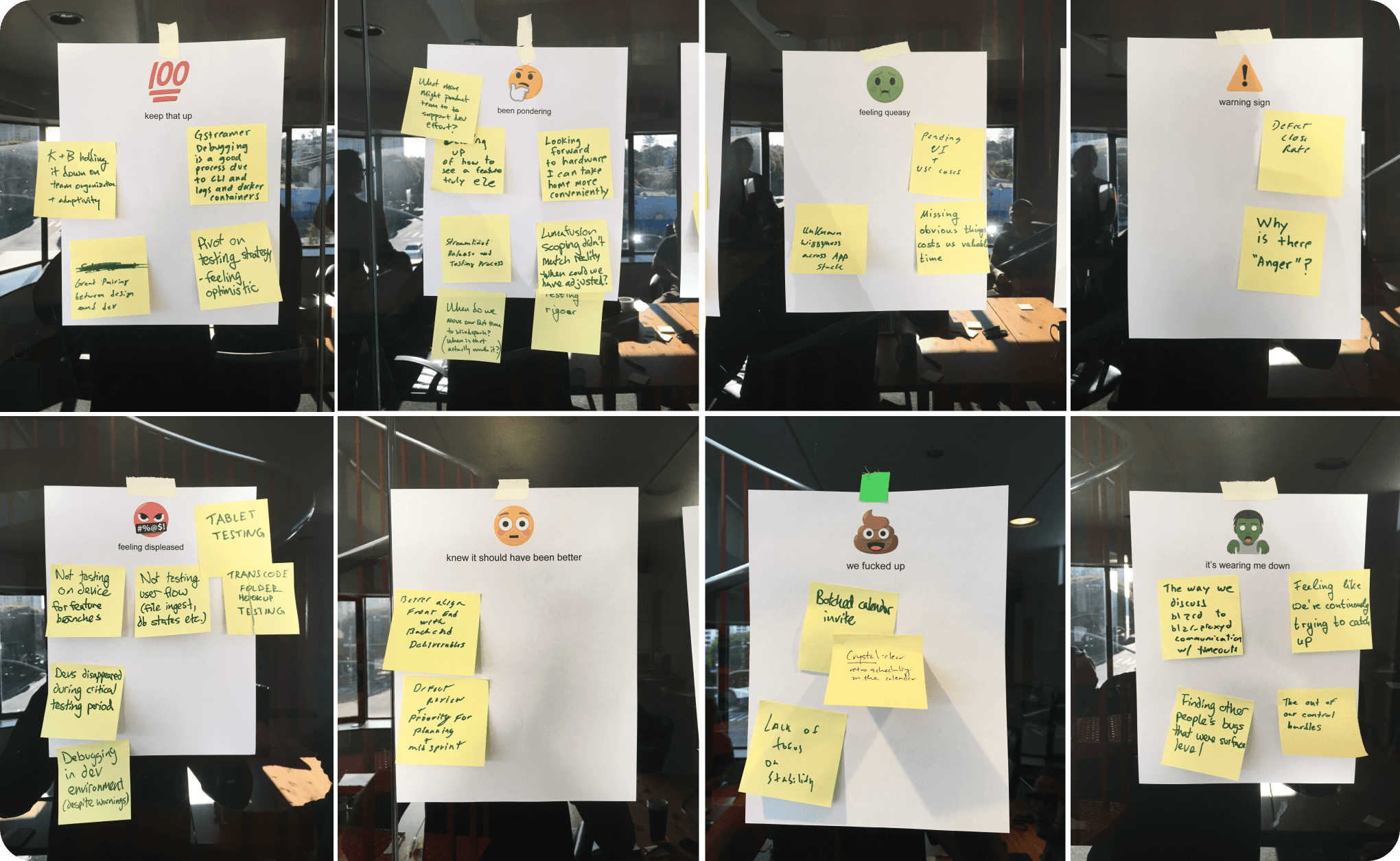
While leading product design at GNARBOX, I also contributed to our startup’s organizational development practices. One system I noticed was underperforming was our software development retrospectives. These sessions were meant to engineer-in team learning, but the standard-issue prompts (“Went well,” “Didn’t go well,” “What to change”) weren’t surfacing deeper dynamics behind recurring issues. The team’s learning system wasn’t producing the right conversations.
I redesigned the retrospective framework with eight experience-oriented prompts aimed at surfacing specific dynamics:
•
💯 Keep that up
•
🤔 Been pondering
•
🤢 Feeling queasy
•
⚠️ Warning sign
•
🤬 Feeling displeased
•
😳 Knew it should have been better
•
💩 We fucked up
•
🧟 It’s wearing me down
Coupled with a more collaborative way of prioritizing discussion, retrospectives shifted from a ritual of venting to a session engineers looked forward to, one that strengthened learning and adaptation.
For me, this was a telling example of how a small systemic adjustment can produce impact. By adjusting the scaffolding, the whole team’s ability to learn and adapt improved.
Torch 360 AI feedback evaluator
While redesigning the Torch 360 feature, one challenge we faced was the risk of poor-quality user feedback. The feature’s purpose was to capture rich qualitative input from colleagues about a user’s leadership skills at work. But with only an empty text box and rudimentary instruction in the legacy design, colleagues often submitted feedback that varied wildly in quality and depth. The underlying problem was the absence of a system that scaffolded high-quality contributions.
The leverage point I identified was the interface needed a feedback loop. To address it, I integrated AI directly into the text box, so the interface would live-review a user’s writing and adaptively coach them toward criteria we had defined as quality, such as including concrete examples, focusing on behaviors rather than judgments, and maintaining respectful language.
This intervention turned an uncontrolled input into a scaffolded process. Instead of leaving feedback quality to chance, the system itself increased the likelihood that every colleague could contribute something genuinely useful.
These cases illustrate the kind of systems thinking I find interesting. My lens isn’t just about organizing complexity neatly or enforcing consistency. It’s about designing structures that support people’s ability to adapt, contribute, and grow. In practice, that means looking for the leverage points where a system either boxes people in or scaffolds their possibility, and intervening to make sure it’s the latter.
In others’ work
I’ve also seen this principle embodied in the work of other designers who created systems that balanced structure with humanity. Some from recent life:
Letterform Archive 10-year identity by COLLINS
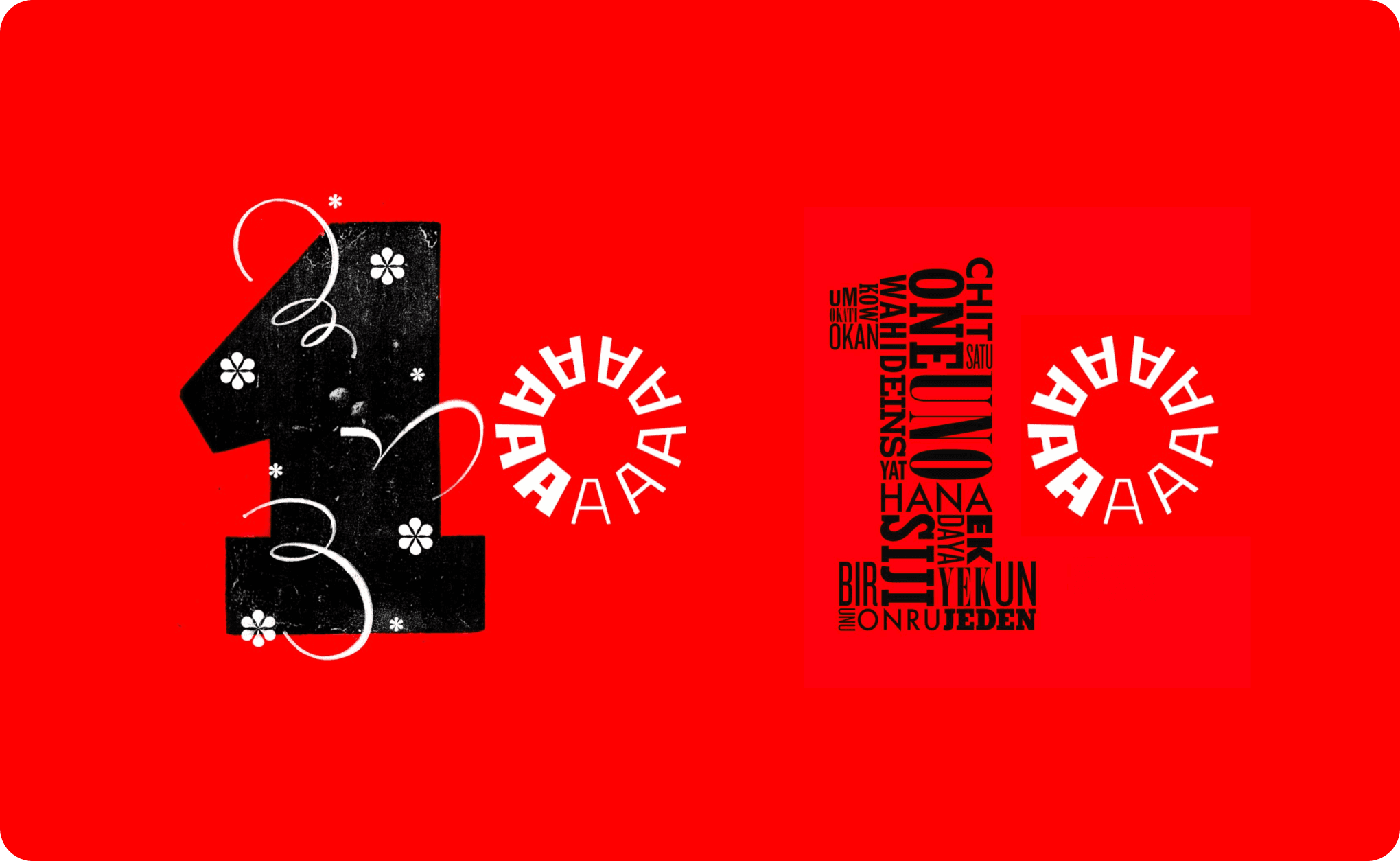
COLLINS’ design work for San Francisco’s Letterform Archive embodies this principle in an act of community celebration. For the archive’s 10-year anniversary, they created a flexible identity system: designer-submitted numerals paired with the institution’s logo to form expressions of “10.” Each version reflected the archive’s core meaning—that it is a living compilation of designers’ work—rather than enforcing a single, static mark. Flexible identities are not uncommon in branding, but this one felt especially effective as scaffolding for human contribution and adaptation. I attended the launch party with the designers and experienced firsthand how the system invited people to see themselves in the Archive’s story.
Figma Community
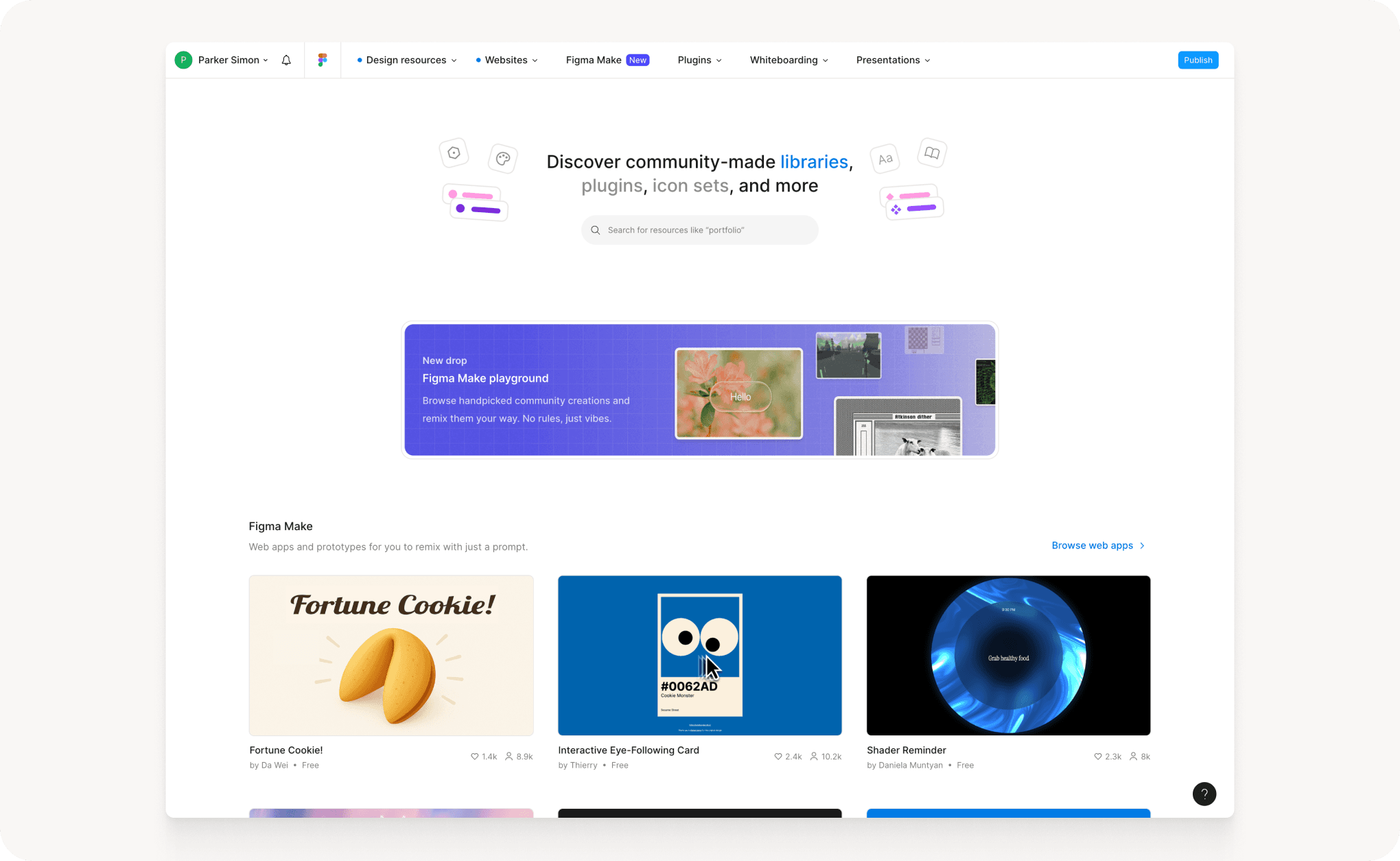
Figma’s Community feature is a powerful example of scaffolding at the ecosystem level. Originally, Figma was just a collaborative design tool. With Community, it became a system that adapts through its users. By enabling designers to publish, share, and remix files, plugins, and widgets, Figma created a framework where practice itself compounds: beginners build on expert work, teams adapt patterns to their context, and the platform evolves as contributions accumulate. The system doesn’t dictate how design should be done; it provides just enough structure for people to adapt, learn, and grow together. In doing so, it raised the floor for the entire design community.
Implications for practice
The personal stance I’ve explored here is: systems should ideally expand possibility, not restrict it. Approached with that value in mind, they don’t box people in; they scaffold flexibility, growth, and creativity. Structured poorly, they calcify into rigid constraints, forcing people into unnatural molds or workarounds. That undermines their ability to be pleasing, trusted, and lasting solutions.
The metaphor is to approach systems less like cages and more like scaffolds. Their purpose is not just to hold order, but to create the conditions where people can contribute, adapt, and evolve.
Field guide
→
Where does this system constrain more than it enables?
→
What scaffolding would help people adapt?
→
How could it raise the floor of experience?