Principle 3 of 6
Design can reveal invisible forces — values, motivations, metaphors — so people can navigate by them.
Why it matters
Throughout my career, I’ve been drawn to giving form to the invisible forces that guide us.
For me, some of the most satisfying moments in design or coaching are when something hidden becomes clear—and suddenly empowering. In user research, it’s the connection that sparks a new product insight. In coaching, it’s the realization that expands someone’s self-understanding. Each unlocks new possibility.
In part 2 of this series, I explored how design is motivated by the unseen—by cultural ideas beneath the surface. Here I want to extend that: design is not only motivated by the unseen; it can reveal the unseen, so that new awareness becomes a source of capability.
Carl Jung once wrote, “Until you make the unconscious conscious, it will direct your life and you will call it fate.” I’ve seen this in design and in developmental coaching: when hidden dynamics are exposed, people gain agency. They can’t navigate what they can’t see.
How do we surface the unseen? Through deep listening, sensemaking, and a kind of cartography of values, motivations, and metaphors. The outcome is strategies that are more aligned, effective, and empowering.
When design practice maps the intangible, it becomes an enabler of agency, not just styling or even problem solving. This principle has shaped my own work, whether uncovering a more resonant target customer in product research, or helping a team see the cultural drivers shaping their collaboration.
A typical design move might streamline data display. Sensemaking design does more: it surfaces the underlying dynamics so people can hold them consciously rather than letting them “direct their fate.” The result is clarity and agency, some of the most powerful gifts I think design can offer.
In today’s world of data overload and complex systems, this work is essential. Reducing friction isn’t enough. People need designs that reveal meaning structures so they can orient with confidence.
In my work
Here are a few moments from my own work where making the invisible visible changed the trajectory of a team, a product, or a conversation.
GNARBOX customer discovery
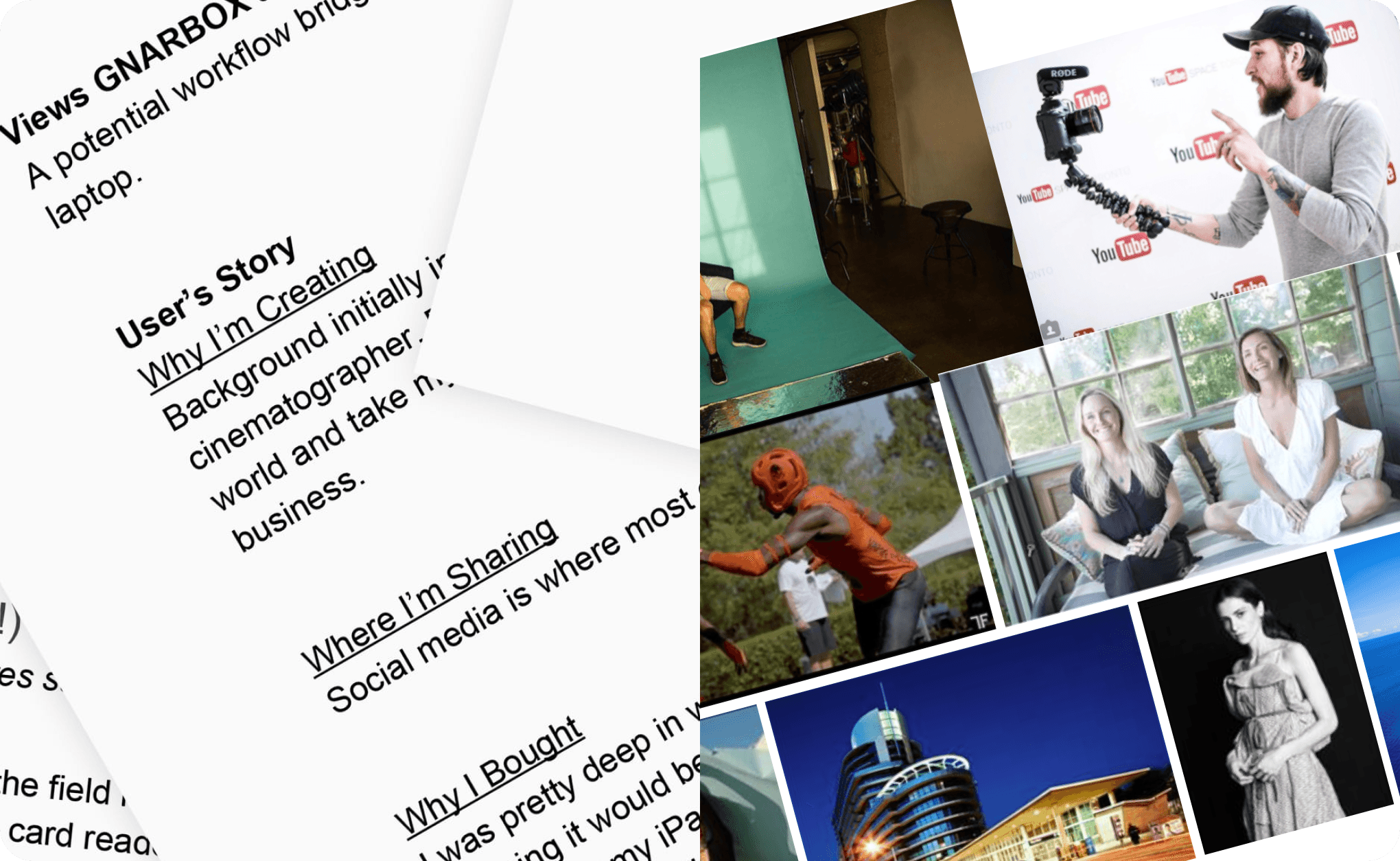
Early in my time leading design at GNARBOX, I faced an awareness gap: who exactly was our product for? As we transitioned from version 1 to version 2 of the product, it was unclear whether to prioritize advanced functionality for professionals or simpler flows for hobbyists.
I brought this gap to our leadership team and led a user research initiative to find clarity. By evaluating a spectrum of content creators—from amateur to professional—we discovered our true target: the Streamlined Content Creator, who cared about reliability, portability, and workflow speed. This insight shifted GNARBOX’s strategy from the hobbyist market to the professional market, aligning product, design, and marketing around a clear segment.
The impact was tangible: a $1M Kickstarter campaign and strong adoption from the professional community. What began as an invisible uncertainty became a shared orientation for the company, a compass that guided product evolution and growth.
Like Humans framework for organizations
After my time at Blank Label, I became curious about organizational purpose—where it comes from, and how it can both orient a team internally and signal brand values to customers externally. That curiosity led me, with colleagues Will Harper and Will Watson, to form a consulting practice called Like Humans.
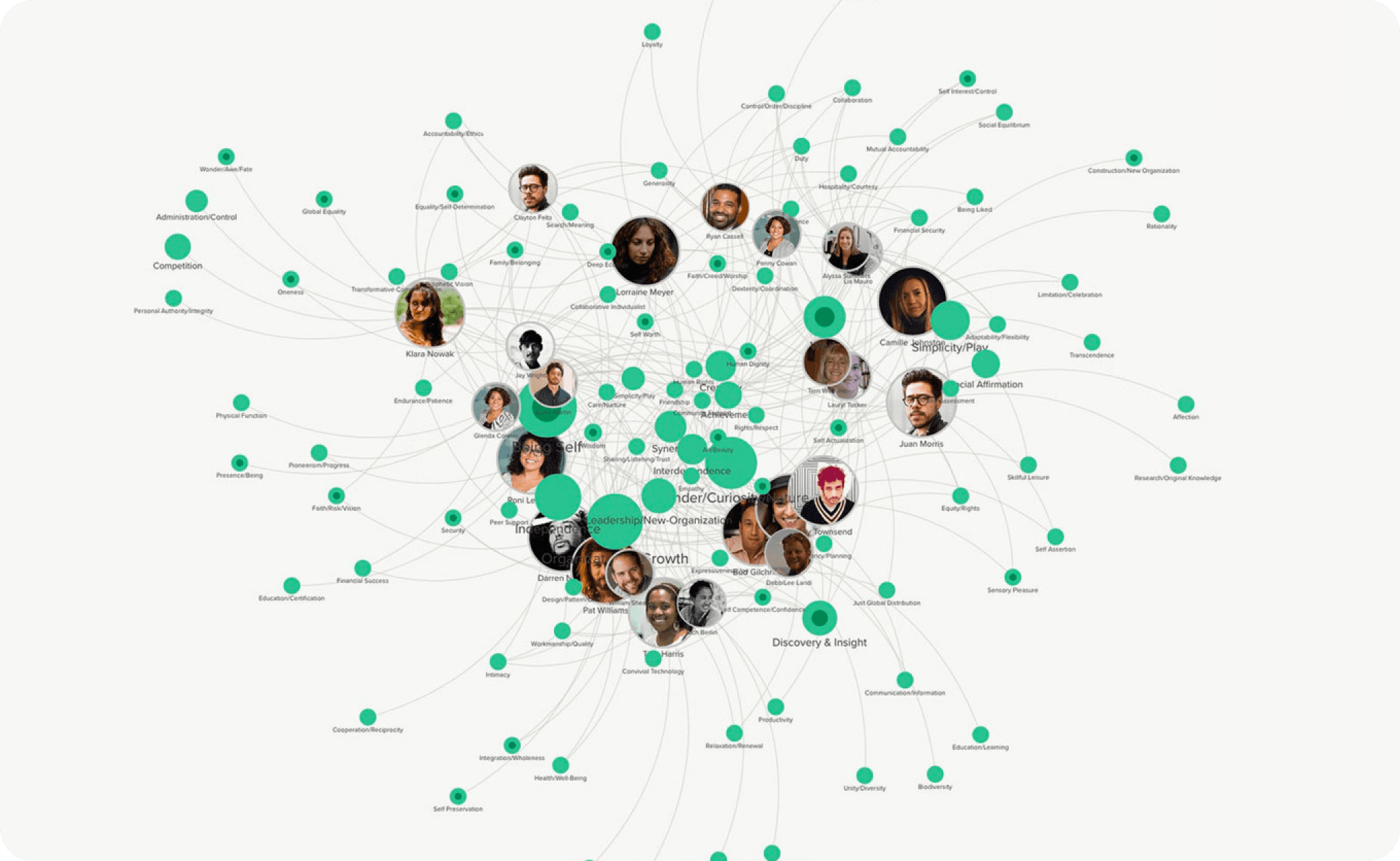
We drew on human development theory, systems thinking, and cybernetics to design a process that made hidden motivators visible. Using values assessments, we mapped each individual’s intrinsic drivers into a team-wide network showing overlaps, tensions, and outliers. We paired this with training in Nonviolent Communication, giving the team a feedback method that let misalignments be surfaced and worked with, rather than left unspoken.
The result was striking once surfaced: teams could now see the social dynamics shaping their collaboration. In one engagement, a team member realized—and felt safe to admit—that his top value was “being liked.” Once named, the group empathetically understood why blunt criticism backfired with him. They shifted their feedback style to begin with affirmation, then frame suggestions as “even better if.” A subtle change, but it dissolved recurring conflict and created more trust.
This was the power of Like Humans: revealing the invisible so teams could navigate by it.
Voice proof of concept for civic dialogue
After the 2016 election, our team at Like Humans wanted to use design to reveal a different kind of political landscape. Public discourse felt polarized and adversarial. Yet we suspected part of the problem was a visibility issue: people could only see each other as “blue” or “red,” not as humans with shared emotions and values.
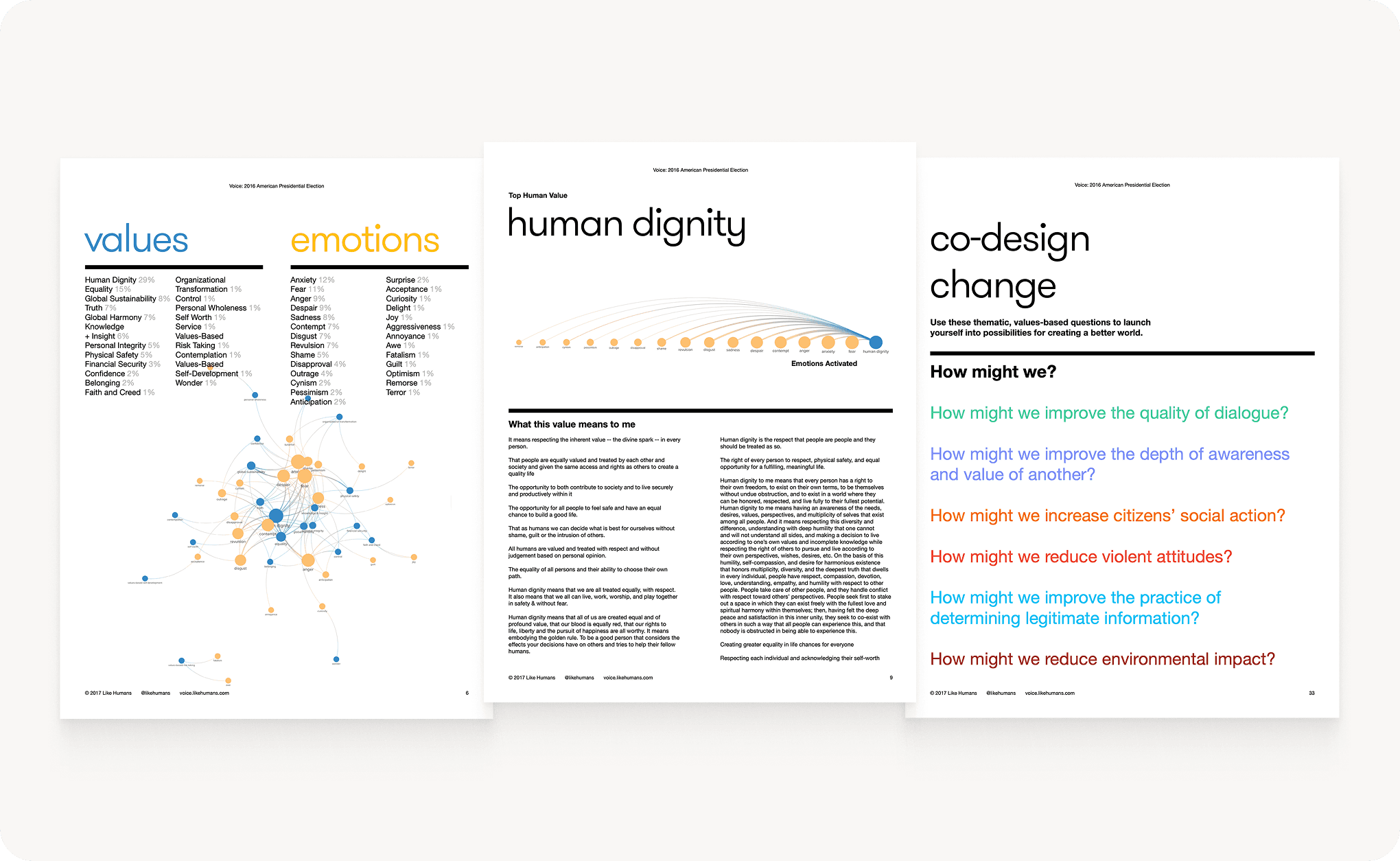
We designed a tool that invited people to select the emotions they were feeling, the values those emotions pointed to, and the desires or requests they held for themselves and their fellow citizens.
Aggregating these inputs revealed powerful patterns (see results report). The tool surfaced relationships between emotions and their underlying values—the hidden “why.” And by asking for non-partisan desires, we could synthesize thematic questions that pointed toward constructive, shared action regardless of political affiliation.
The pilot group was modest (169 participants), but the results showed what’s possible when design makes invisible forces visible. Beneath division, there was more alignment than most could see—and design gave people a way to navigate toward it.
In others’ work
Beyond my own projects, I’ve seen this principle alive in successful designs across disciplines, from organizational rituals to digital products to therapeutic methods.
Check-in ritual for meetings
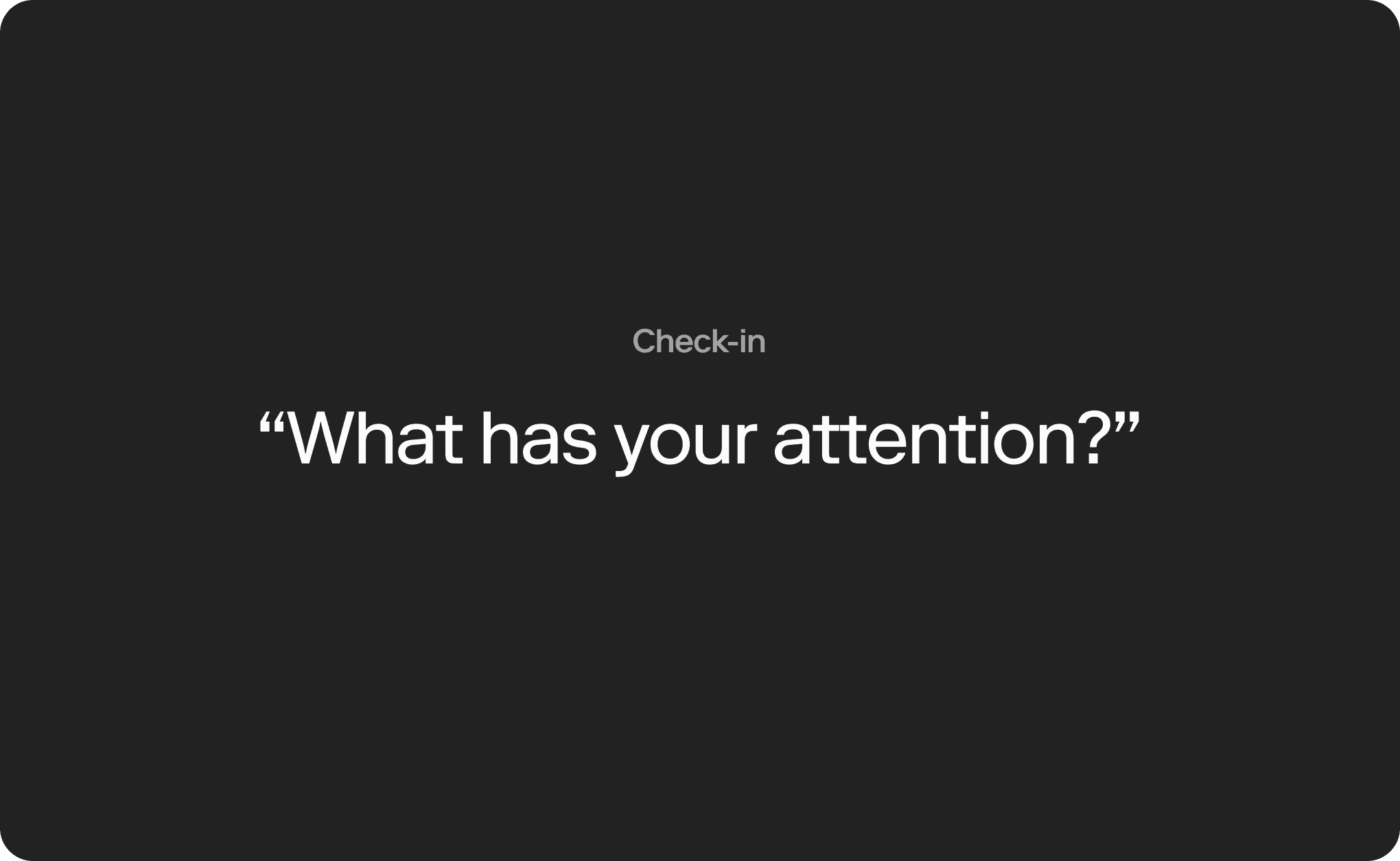
One of the simplest yet most powerful design choices I’ve seen in organizational practice is the check-in. Instead of diving straight into business, a check-in invites each person to name what has their attention or what they’re feeling as the meeting begins. It surfaces the emotional landscape in the room and draws in quieter voices.
I first encountered this at the org design consultancy The Ready, where every meeting began with a round of “What has your attention?” I’ve also practiced it in communities like the Mankind Project, where each person names their current feelings at the start. During my time around The Ready, I saw Bob Gower extend this practice, which he later developed into the book Radical Alignment. His framework surfaces a group’s intentions, concerns, boundaries, and dreams at the start of high-stakes sessions where alignment is critical.
As simple as it seems, this design move expands conversations by drawing out voices that might otherwise remain unspoken. By making invisible dynamics visible, it builds empathy and opens the way for more constructive dialogue.
Strava for athletic performance
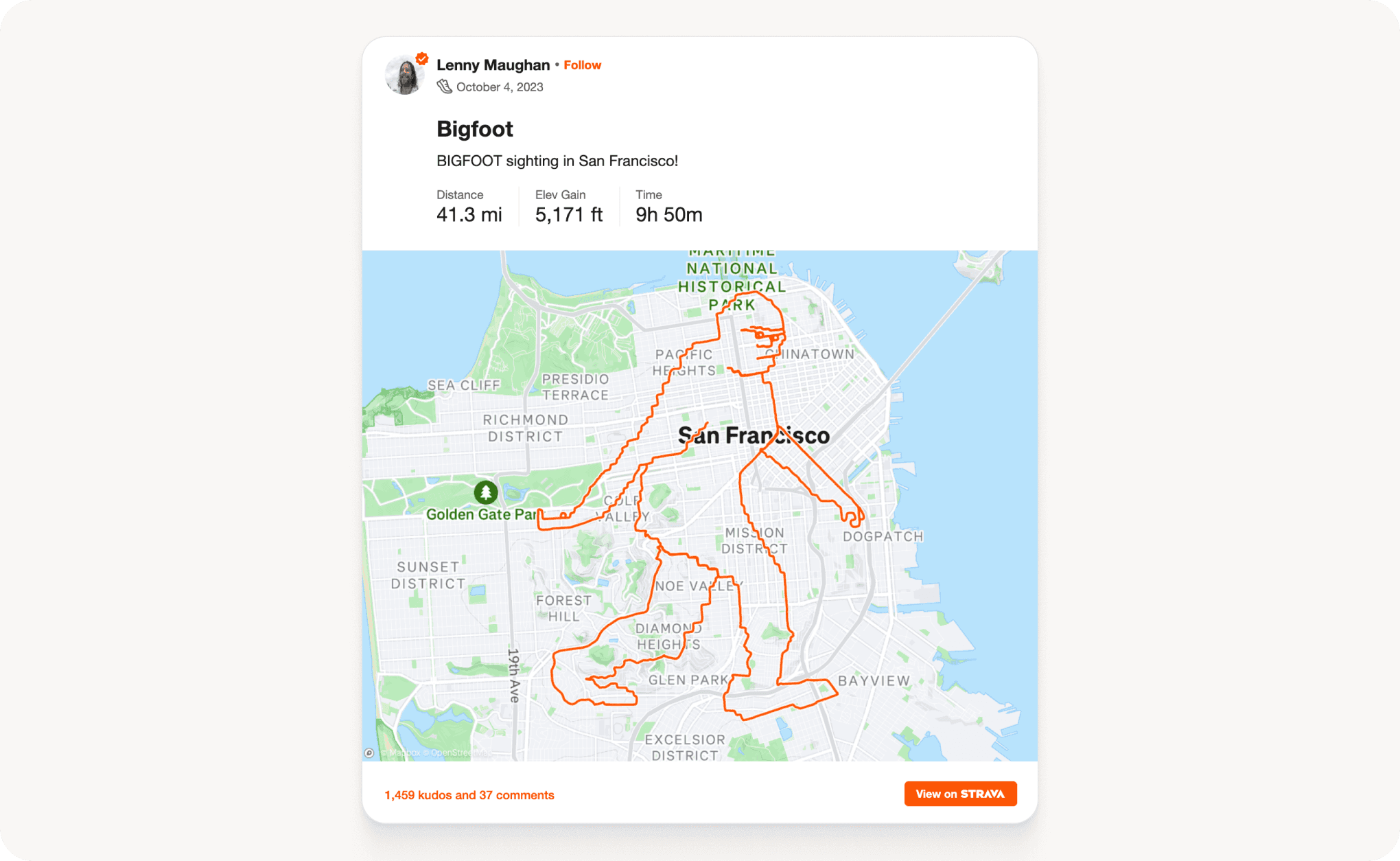
Some product designs make the invisible visible in ways that reshape how people live. Strava does this by mapping invisible effort—pace, elevation, mileage—into data that reveals patterns and progress. Handy in a race! It also layers on social context, turning personal metrics into shared signals that motivate behavior.
By making effort visible and comparable, Strava changes how athletes train, set goals, and see themselves. It demonstrates how design can extend self-awareness, giving people a clearer compass for growth.
Focusing & IFS for self-awareness
Some of the most elegant designs for self-awareness aren’t products, but practices. Eugene Gendlin’s Focusing and Richard Schwartz’s Internal Family Systems are structured methods for surfacing the unseen dynamics within our inner lives. Having worked with both in my developmental coaching, these designed processes create a way to notice and name hidden parts—feelings, beliefs, or sub-personalities—that often drive behavior unconsciously.
By externalizing these “parts” through language, imagery, or dialogue, people can build a new relationship to them. The invisible becomes visible, and with visibility comes choice: instead of being ruled by unconscious dynamics, individuals can navigate their inner world with more clarity and compassion.

Implications for practice
By approaching design as a way to reveal the unseen, we can give those we design for more clarity and confidence. A few ways this might apply:
•
When we notice invisible values, trade-offs, or motivations shaping a situation, make them visible. Give people a way to work with them instead of around them.
•
Provide meaning, not just information. Don’t stop at presenting data or options; interpret what they signify so people can orient.
•
Use design as a compass. Ask: how does this design help someone find direction, not just complete a task?
Design doesn’t just arrange what’s already visible. By working with this principle, we move from removing friction to revealing orientation, helping people navigate complexity with clarity and agency.
Field guide
→
What would an effective compass look like for your design challenge?
→
What invisible forces are influencing the problem you’re working on?
→
How might you surface those forces so people can actually navigate by them?