Principle 6 of 6
Good design is the craft of integration — making the fragmented feel whole.
Why it matters
Modern life can be noisy and splintered. Our attention fractures across channels, our work divides into silos, our inner sense of self may even split between what we think and what we feel.
Design practice contends with fragmentation too. It must fuse intent, structure, style, and context into a unified solution. Focus can drift away from vision, language misaligns with form, and teams chase alignment across different interpretations of the same problem. We make progress, yet when the parts don’t add up to something that feels whole, something essential is missing.
I’ve come to see integration as a powerful craft, the invisible skill beneath strong design outcomes. The superpower is synthesis: combining insight, craft, language, and vision into experiences that make complexity feel coherent. It harmonizes the rational and the emotional, the technical and the meaningful. Regardless of scale, what I consider good design doesn’t just function; it feels unified.
Across design, coaching, and my own development, I’ve lived within the gaps between mind and body, culture and function, fragments and wholeness. What I’ve learned from wise teachers and effective designs is the same lesson: integration over fragmentation. Working toward coherence helps resolve complexity and align meaning across systems, including inner ones.
The same way personal growth involves integrating the parts of ourselves, design practice integrates many different elements into something that feels coherent and meaningful. Think about objects or systems you consider well designed. You’d never describe them as haphazard or disjointed; we are drawn to things that feel integrated. Good design is coherence made visible, the craft of making the many feel like one.
In design practice, achieving that integration often translates into less cognitive load, smoother experiences, easier adoption, and beauty. But beyond commercial or functional outcomes, integration supports something deeper: helping teams, systems, and even individuals regain coherence where things have drifted apart.
In my work
Across my roles, I’ve worked on several efforts to integrate scattered systems into coherent experiences.
Integrating design systems at Torch
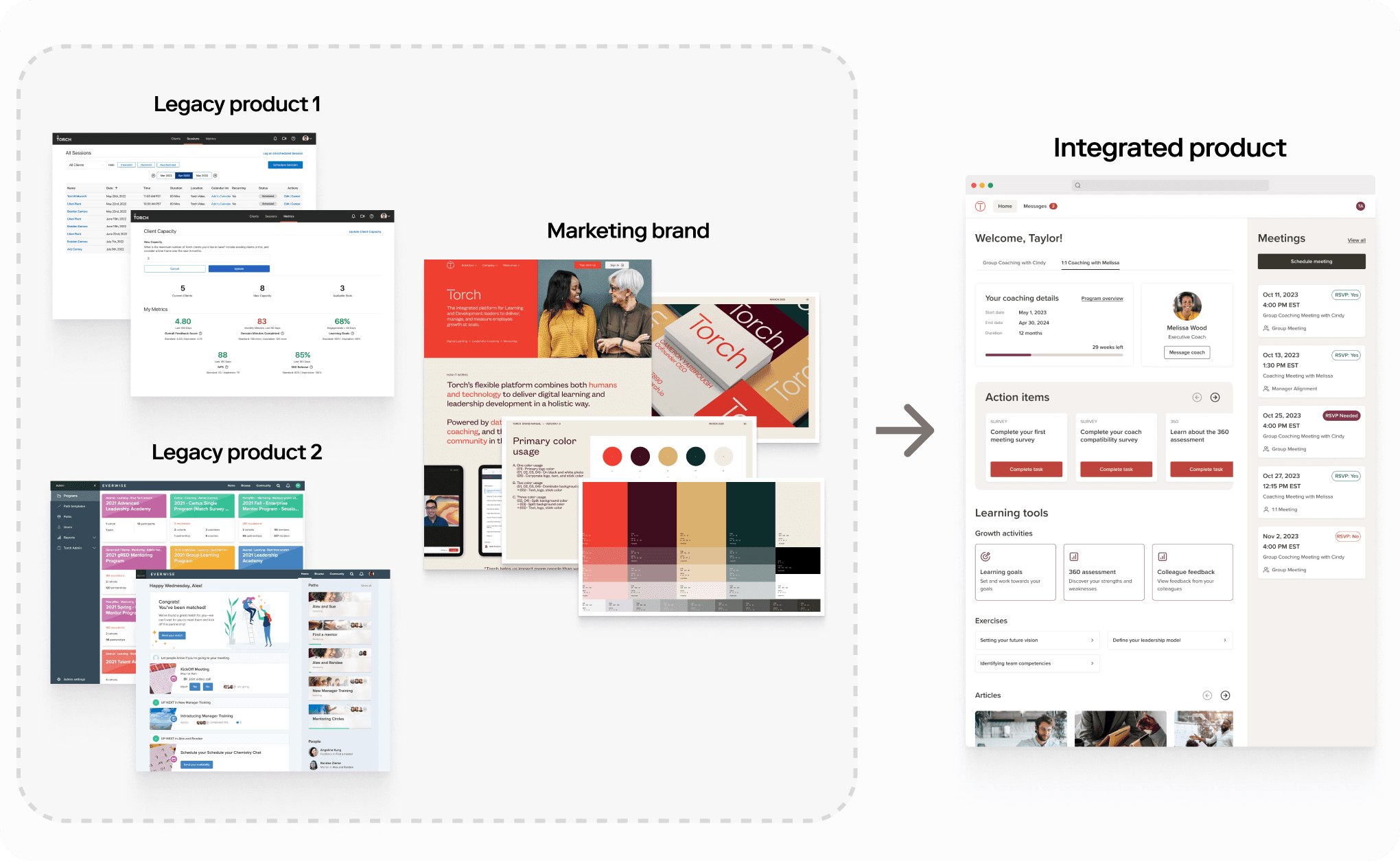
When I joined Torch, the company was in the wake of an acquisition and rebrand. The product reflected that fracture: two different interface systems, neither aligned with the newly designed marketing brand. Each part worked on its own, but the platform as a whole felt inconsistent.
I led the creation of a new design system that realigned the platform to the company’s external-facing branding. As new product features adopted the new design system, the product slowly recomposed itself into a coherent whole. It was an opportunity to see this principle live over time. Pursuing this integration, teams could design from a shared center, and users could move through the platform more seamlessly.
Integrating workflows at GNARBOX
At GNARBOX, we saw how digital fragmentation showed up in the lives of modern content creators. Their process stretched across laptops, cameras, memory cards, cables, and disparate software that wasn’t designed to live in the environments where they needed reliability most. The founders envisioned a different future: a new product that integrated these separate pieces into one coherent, portable workflow.
I joined to help design the second-generation experience across mobile apps, hardware, and brand. The work quickly became an exercise in integration at multiple levels. The physical device, its on-device interface, and its companion mobile apps had to behave like one system, not three independent tools. Hardware and software needed to speak the same language so creators could move seamlessly between backing up footage, reviewing content, and preparing for the next shot without dropping out of their flow. As the product evolved, we also repositioned GNARBOX from a “weekend adventurer gadget” to a professionally engineered tool, aligning identity, behavior, and customer need into a single expression.
The result was a workflow that felt continuous rather than cobbled together, a tool where each part completed the others. It was a rich example of how integration turns complexity into clarity, and scattered processes into a coherent creative experience.

In others’ work
Integration appears wherever design brings separate pieces into meaningful relationship.
Integrating past and present: The High Line
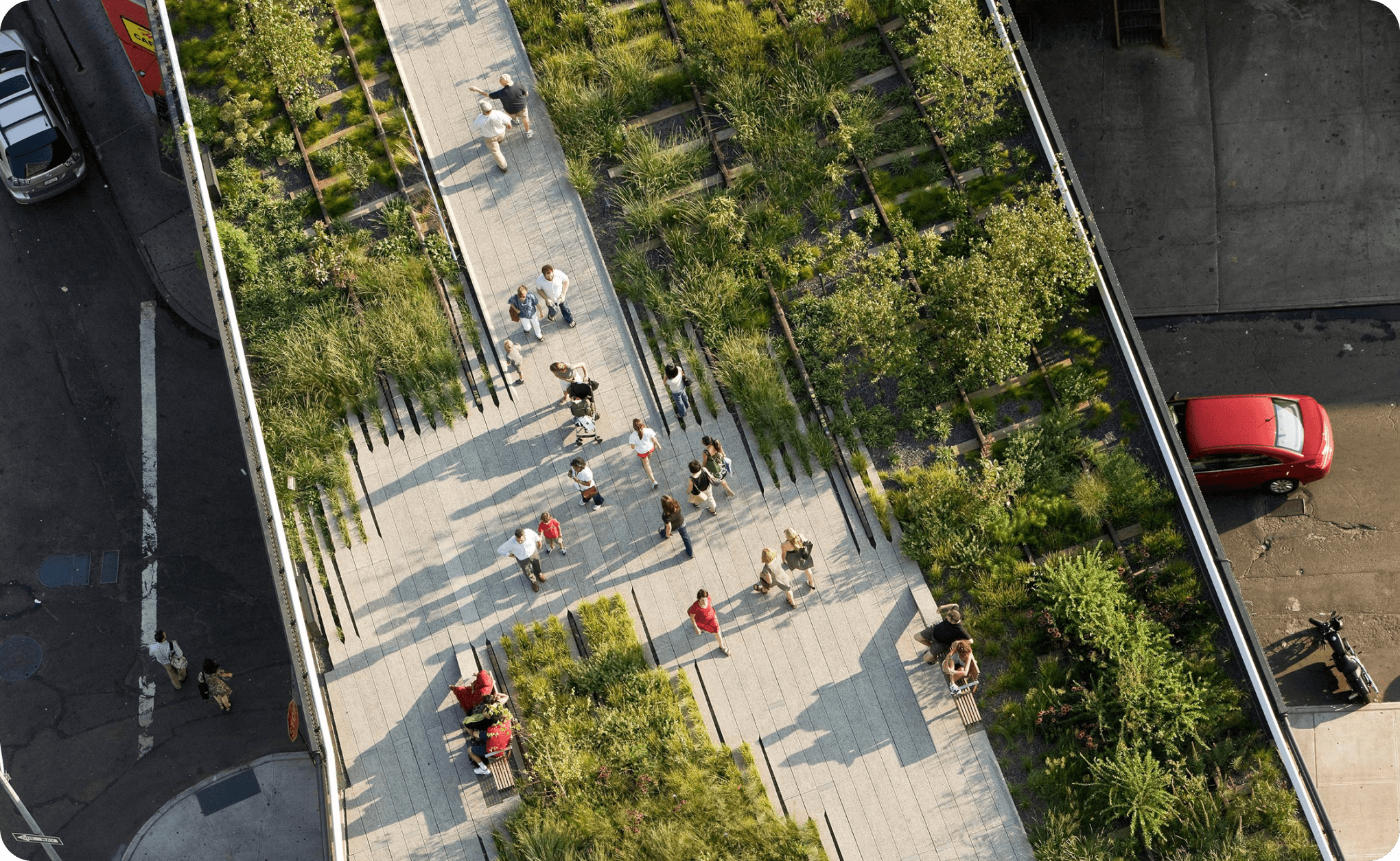
The High Line in New York represents an expression of this principle in the built environment. The park began as an abandoned rail line, a historical fragment suspended above the city and disconnected from the life around it. Instead of erasing that past, the designers integrated what was already there: the industrial steel, the path of the original tracks, native plantings, public art, and the movement of people through the city. Walking it, those layers resolve into a single experience. What was once leftover infrastructure becomes a continuous and coherent path where ecology, architecture, and community now coexist. This example of urban design brought disparate elements into relationship so that a new whole could emerge.
Integrating aspects of life: Ikigai
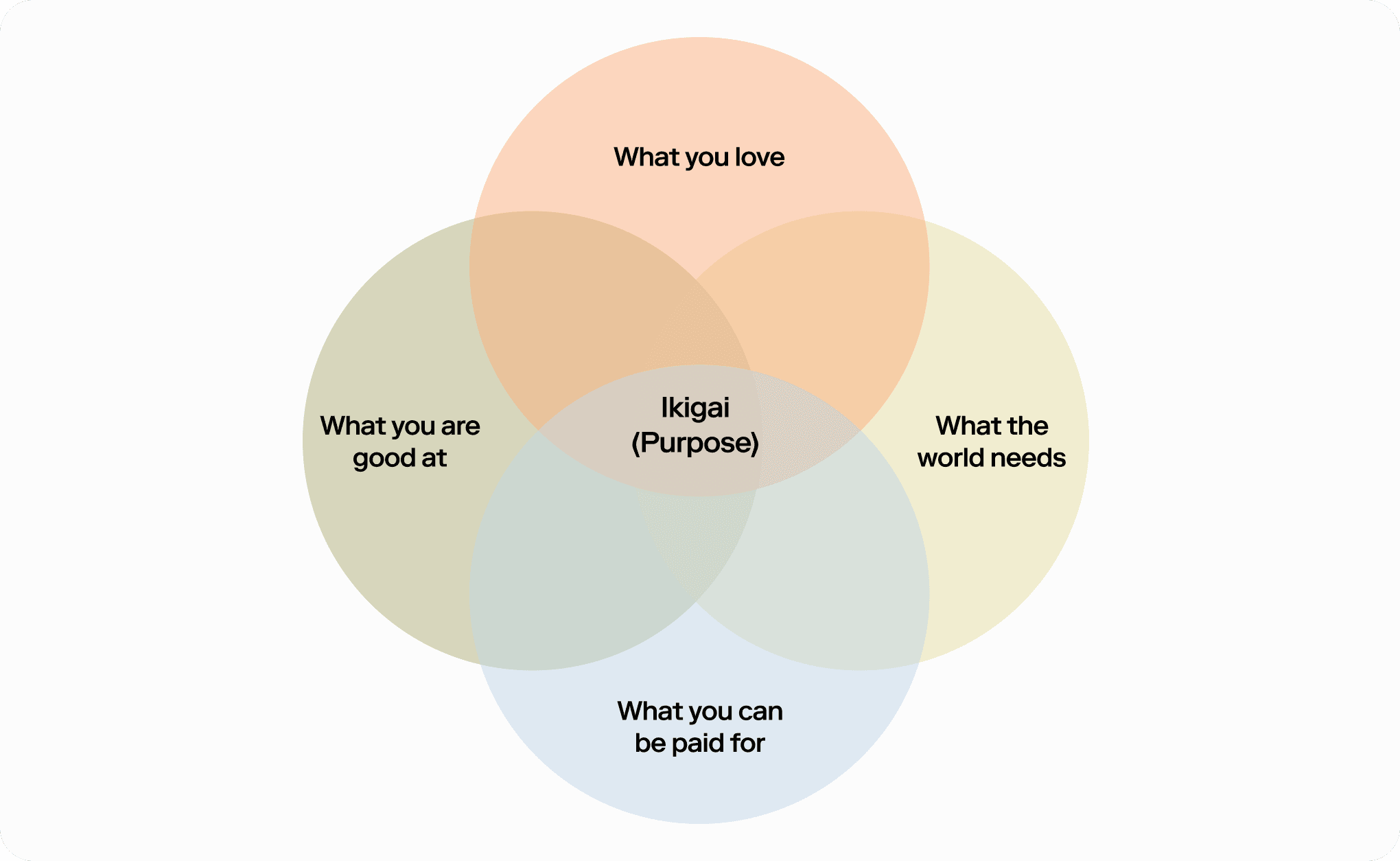
In the Japanese concept of ikigai, four overlapping circles are drawn to represent what you love, what you are good at, what the world needs, and what you can be paid for. Its deeper insight is that a meaningful life is not built by pursuing these parts independently, but by integrating passion, skill, contribution, and livelihood into one coherent sense of purpose. When these forces align, the result creates a felt wholeness, a sense that one’s life and identity are unified. It shows how integration becomes a meaning-making function, a way to bring dynamic elements into relationship and create clarity.
Implications for practice
If integration is a core design value, it has lessons for how we work. It asks us to see beyond isolated pieces and toward the relationships that create coherence. Here are a few ways it can show up in practice:
Create a single source of truth. Fragmentation often begins with competing narratives. Center the work in one clear place that holds the problem, the assumptions, the principles, and the measures of success. Give people an integrated reference point.
Audit the seams. Designs can have moments where users feel the handoff between systems or assumptions. Identify the top seams and intentionally design them away. Integration shows up most clearly in the places where friction disappears.
Let disciplines overlap. Integrated experiences emerge when research, craft, language, and systems inform one another. Treat these not as stages, but as perspectives in dialogue.
Protect coherence over time. Integration is not a one-time event. As things evolve or pressures increase, reconnect the pieces that drift apart. Coherence needs care. That might look like periods focused on simplification or cohesion over addition.
When we design this way, we’re not just reducing friction. We’re shaping the conditions for fragmented things to work together.
Field guide
→
Where are the seams, and what would make the experience feel whole?
→
What is the center of this work, and is everything oriented around it?
→
What is unnecessary here, and what might be removed for coherence?